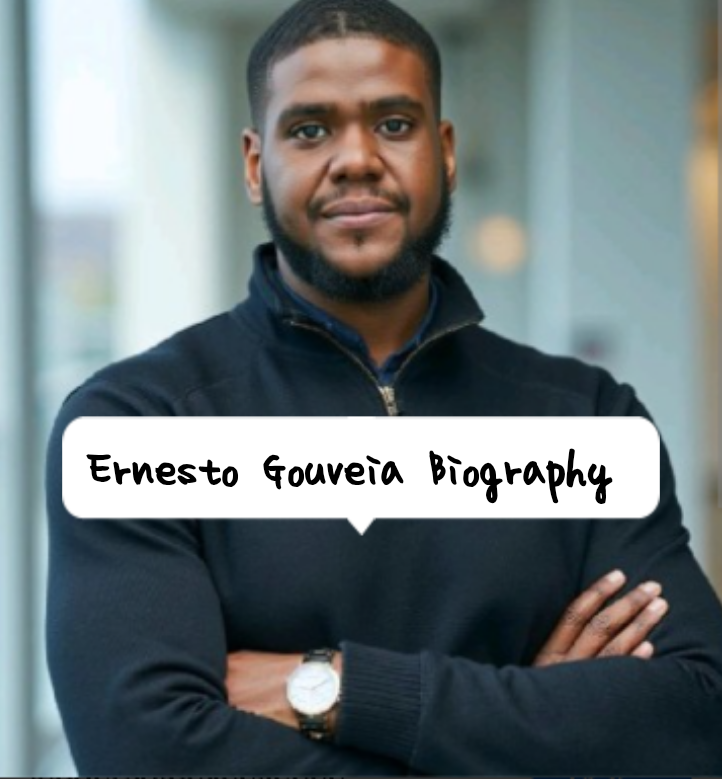
Ernesto Gouveia Biography
Ernesto Gouveia Gove is a distinguished Mozambican economist and central banker who served as Governor of the Banco de Moçambique from 2006 to 2016. With a career spanning more than four decades at Mozambique’s central bank, he played a pivotal role in shaping the country’s monetary policy, promoting financial inclusion, and fostering economic stability during a period of significant national transformation. Recognized internationally as Africa’s Central Bank Governor of the Year in 2015, Gove’s leadership emphasized prudent macroeconomic management, digital financial innovation, and the expansion of banking services to underserved communities. His contributions have left a lasting impact on Mozambique’s financial sector and continue to influence economic development across the region.
Ernesto Gouveia Early Life and Background
Ernesto Gouveia Gove was born in 1957 in Inhambane, a coastal province in southern Mozambique known for its rich cultural heritage and historical significance in the country’s development. Growing up in the years leading to and immediately following Mozambique’s independence from Portugal in 1975, he experienced a nation in profound transition. The period was marked by political upheaval, the establishment of a socialist government under FRELIMO, and the challenges of building institutions from scratch after centuries of colonial rule. Inhambane, with its mix of traditional communities and emerging economic activities centered on fishing, agriculture, and trade, provided a backdrop that likely instilled in young Gove an appreciation for resilience and community-oriented progress. As a teenager during the post-independence era, he witnessed the nationalization of key sectors, including banking, which would later shape his professional path. The Mozambican Civil War, which began in 1977 and lasted until 1992, added layers of economic hardship and uncertainty to daily life across the country, yet it also fostered a generation committed to rebuilding national institutions. Gove entered adulthood at a time when Mozambique was forging its identity as an independent state, and his early exposure to these dynamics laid the foundation for a career dedicated to economic stability and institutional strength. His family background, rooted in the region’s humble yet determined ethos, emphasized education and public service as pathways to contribution, values that would guide him throughout his life.
Education
Gove pursued higher education with a clear focus on economics and finance, fields that aligned with the nation’s urgent need for skilled professionals in the new republic. He earned a degree in economics from the Universidade Eduardo Mondlane in Maputo, the country’s premier institution of higher learning, which at the time was central to training leaders for the post-colonial economy. The university curriculum emphasized development economics, monetary policy, and the challenges of transitioning from colonial exploitation to self-sustaining growth, providing Gove with both theoretical knowledge and practical insights into Mozambique’s unique context. Following his undergraduate studies, he advanced his expertise by obtaining a master’s degree in financial economics from the University of London. This international education exposed him to advanced concepts in monetary theory, banking regulation, and international finance, which were particularly relevant as Mozambique began integrating more deeply into global markets in the late 1980s and early 1990s. The program in London honed his analytical skills and introduced him to best practices in central banking that he would later adapt to African realities. Throughout his studies, Gove demonstrated a commitment to applying academic learning to real-world problems, a trait that distinguished him early on. His educational journey not only equipped him with technical proficiency but also broadened his perspective on how sound economic policies could drive national development, especially in resource-rich yet infrastructure-limited environments like Mozambique.
Ernesto Gouveia Career
Gove’s professional journey began on March 9, 1976, when he joined the Banco de Moçambique, the country’s central bank, in its Documentation and Information Center. This entry point came just months after Mozambique’s independence, at a moment when the institution was undergoing radical transformation from a colonial-era bank to a tool for socialist economic planning. Starting at the age of 19, he quickly immersed himself in the operational realities of a young central bank tasked with managing currency issuance, foreign reserves, and credit allocation in a war-torn economy. Over the subsequent decades, he progressed through a series of increasingly responsible roles across multiple departments, including the Foreign Department, the Currency Issuing and Treasury Department, and the Credit Departments. These positions allowed him to gain hands-on experience in foreign exchange management, treasury operations, and credit policy formulation, all critical areas during Mozambique’s shift from centralized planning toward market-oriented reforms in the late 1980s and 1990s. By the early 1990s, Gove had risen to become Director of Foreign Currency Operations and later Director of Currency Issuing and Treasury, where he played a key part in stabilizing the metical and navigating the complexities of international debt and trade relations amid the end of the civil war.
In 1991, he was appointed Executive Director and Member of the Board, a promotion that positioned him at the heart of strategic decision-making. This role involved overseeing broad policy implementation and contributing to the bank’s evolving mandate as Mozambique embraced structural adjustment programs supported by international financial institutions. His steady ascent continued, culminating in his appointment as Deputy Governor, where he supported the leadership in addressing inflation pressures, reserve management, and the promotion of financial sector development. On July 29, 2006, just days after turning 49, Gove was named Governor of the Banco de Moçambique by presidential decree. He assumed the role at a pivotal time, as the country was experiencing a surge in foreign investment driven by natural gas discoveries and other resource projects. During his tenure from 2006 to 2016, Gove prioritized tight monetary policy to combat inflation and maintain currency stability. He implemented measures that helped anchor the metical against volatility, fostered investor confidence, and encouraged foreign direct investment inflows that boosted economic growth. His leadership emphasized the expansion of financial services into rural areas, recognizing that traditional banking models left much of the population underserved. Through initiatives promoting mobile financial services and financial literacy, he advanced inclusion for smallholder farmers, micro-entrepreneurs, and women, who form a significant portion of the informal economy. Gove also chaired the Board of Directors of the Sociedade de Notícias and served on the Fiscal Council of the Açucareira de Mafambisse, broadening his influence into media and agribusiness governance.
Even after stepping down as governor in 2016, Gove remained active in economic circles. He transitioned into the private sector, focusing on agricultural ventures that aligned with Mozambique’s need for diversified growth beyond extractives. In 2025, he returned to the Banco de Moçambique headquarters as a guest speaker for the “First-Hand Accounts” series, part of the institution’s 50th anniversary celebrations. In that presentation, he reflected on the modernization of technological infrastructure during his governorship and urged younger professionals to appreciate the sacrifices of earlier generations. His career spanned more than four decades of profound change in Mozambique, from the socialist experiments of the 1970s through the peace accords of 1992, the commodity boom of the 2000s, and into the challenges of post-2016 debt management and diversification efforts. Throughout, Gove advocated for pragmatic policies that balanced stability with innovation, always grounding his decisions in the realities of a developing African economy.
Ernesto Gouveia Achievements
Gove’s contributions to Mozambique’s economy and the broader African financial landscape earned him widespread recognition. One of his most notable honors came in 2015 when he was awarded Africa’s Central Bank Governor of the Year by The Banker magazine, an accolade that highlighted his success in stabilizing the metical, curbing inflation, and restoring investor confidence amid global economic turbulence. Under his guidance, the central bank navigated the aftermath of the 2008 financial crisis by maintaining prudent reserve levels and adjusting interest rates to support growth without fueling price spikes. His emphasis on digital financial services helped position Mozambique as a regional leader in mobile money adoption, extending basic banking tools to millions who previously relied on cash or informal lenders. This push for inclusion not only reduced transaction costs but also supported broader development goals, such as poverty alleviation and gender equity in access to credit. Gove’s tenure coincided with significant increases in foreign direct investment, particularly in energy and infrastructure, as his policies signaled a reliable and transparent regulatory environment. He actively participated in international forums, including the African Mobile Phone Financial Services Policy Initiative, where he served as chair from 2016 to 2018 and championed peer learning among regulators to tailor digital finance solutions to African contexts. His speeches, such as the 2007 address on extending financial services to rural populations, underscored the importance of overcoming infrastructure barriers and designing products suited to low-income users. Even in retirement from public office, Gove continued to influence policy discourse through advisory roles and public engagements, reinforcing the link between sound monetary management and sustainable development. His legacy includes a more resilient banking sector, greater financial literacy nationwide, and a model for how central bankers in emerging markets can balance domestic priorities with global integration. These accomplishments reflect decades of dedicated service and a forward-looking approach that continues to benefit Mozambique’s economic trajectory.
Ernesto Gouveia Personal Life
Outside his professional endeavors, Ernesto Gouveia Gove maintains a low public profile centered on family and community ties. He is a devoted family man, with roots that remain connected to Inhambane even as his career took him to Maputo and international engagements. Gove is married, though details about his spouse are kept private in line with his preference for discretion. The couple has at least one son, Ernesto Gouveia Gove Jr., who has followed in his father’s footsteps by building a career in corporate and investment banking. The younger Gove works with Absa Bank Moçambique and holds advanced qualifications, including a master’s degree in petroleum and energy economics from the University of Aberdeen, reflecting the family’s shared interest in economic development and Africa’s resource sectors. Family gatherings and support for local initiatives, such as education and community projects in affected areas, appear to be important aspects of Gove’s personal world. He values humility and often draws on his early life experiences to emphasize collective effort over individual acclaim. In his spare time, Gove has shown interest in agriculture, channeling this into private business activities that contribute to food security and rural employment. His personal philosophy aligns closely with his professional one: a belief in steady progress, education as a lifelong tool, and the power of institutions to uplift society. While he avoids the spotlight on private matters, Gove’s life illustrates the balance many public figures strive for between high-level responsibilities and grounded family values in a rapidly changing nation.
FAQs
What is Ernesto Gouveia Gove best known for in his professional career?
Ernesto Gouveia Gove is best known for his decade-long tenure as Governor of the Banco de Moçambique from 2006 to 2016, during which he implemented monetary policies that stabilized the national currency, controlled inflation, and attracted foreign investment to support economic growth in Mozambique.
Where and when was Ernesto Gouveia Gove born?
Ernesto Gouveia Gove was born in 1957 in Inhambane, Mozambique, a province that shaped his early understanding of community resilience and economic challenges in the post-independence era.
What educational background prepared Ernesto Gouveia Gove for leadership in central banking?
Gove holds a degree in economics from the Universidade Eduardo Mondlane in Maputo and a master’s degree in financial economics from the University of London, qualifications that equipped him with both local context and international financial expertise essential for his roles.
How long did Ernesto Gouveia Gove serve at the Banco de Moçambique before becoming governor?
Ernesto Gouveia Gove joined the central bank in 1976 and spent 30 years in various capacities, advancing from entry-level positions through directorships and deputy governorship before his appointment as governor in 2006.
What major award did Ernesto Gouveia Gove receive for his contributions to African banking?
In 2015, Gove was named Africa’s Central Bank Governor of the Year by The Banker magazine in recognition of his effective management of monetary policy and promotion of financial inclusion across Mozambique.
What has Ernesto Gouveia Gove focused on since leaving the position of governor?
Since 2016, Gove has engaged in private sector activities, particularly in agriculture, while continuing to share institutional knowledge through events like the 2025 “First-Hand Accounts” talk at the Banco de Moçambique, emphasizing modernization and policy lessons for future generations.
Does Ernesto Gouveia Gove have family members involved in finance?
Yes, his son Ernesto Gouveia Gove Jr. works in corporate and investment banking at Absa Bank Moçambique, continuing the family’s tradition of economic leadership in Mozambique and beyond.