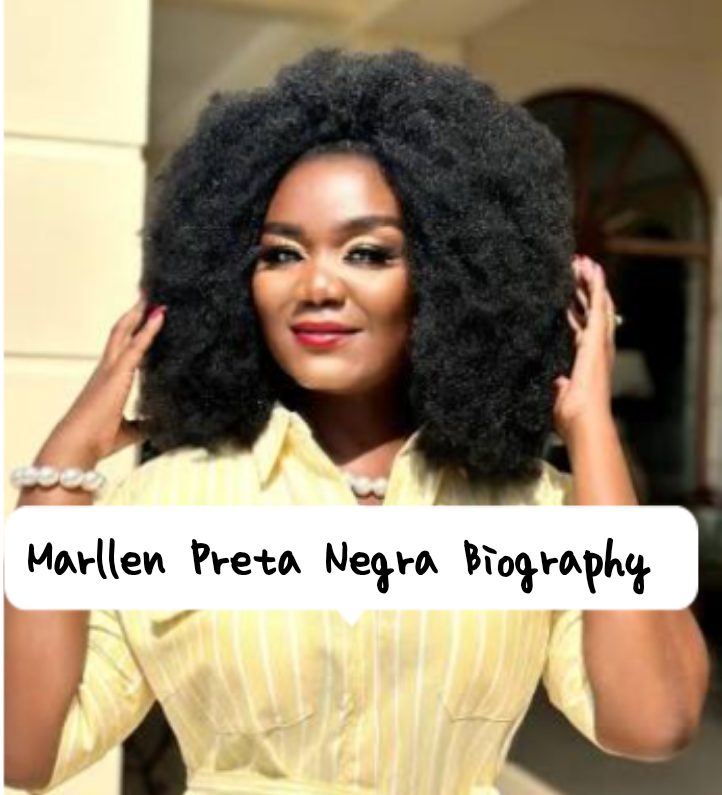
Marllen Preta Negra Biography
Marlene Julieta Ngoenha Matingane, known professionally as Marllen Preta Negra, was born on August 23, 1983, in Maputo, Mozambique. She is a Mozambican national who has risen to prominence as a multifaceted artist, singer, dancer, actress, entrepreneur, and philanthropist. Over more than two decades, she has become a defining voice in Mozambican music, blending traditional rhythms with contemporary pop and Afrobeat influences to create sounds that resonate deeply with audiences across Africa and beyond. Her stage name Preta Negra reflects pride in her identity and heritage, and she has used her platform not only for entertainment but also for social advocacy, cultural representation, and family empowerment.
Marllen Preta Negra Early Life
Marllen Preta Negra grew up in Maputo, the vibrant capital city of Mozambique, during a period when the country was still navigating the challenges and opportunities of post independence recovery. Born into a society rich with diverse cultural traditions, including the rhythmic heritage of southern Mozambique, she developed an early fascination with the performing arts. From a young age, the energy of music and movement surrounded her, as Maputo served as a hub for artistic expression amid the broader African cultural renaissance of the late twentieth century. Although details about her immediate childhood environment remain private, her entry into professional performance at the tender age of fifteen reveals a determined spirit and natural talent that set the foundation for her lifelong career.
In 1998, at just fifteen years old, Marllen began her artistic journey as a theater actress. She joined several esteemed theater companies, including Mbeu, Mutumbela Gogo, Intyso, and Mahamba. These groups were known for their commitment to storytelling that captured Mozambican realities, from everyday struggles to celebrations of resilience and identity. Her involvement in theater was not limited to acting; she simultaneously honed skills as a singer, dancer, and even guitarist during live performances. This multifaceted training allowed her to develop a holistic understanding of stage presence, vocal delivery, and physical expression. The theater scene in Maputo during this era provided a nurturing yet competitive space where young talents like Marllen could experiment and grow. Her early experiences taught her the discipline required for live shows and the importance of connecting emotionally with audiences, skills that would later define her success in music.
By immersing herself in these companies, Marllen absorbed influences from traditional Mozambican dance forms and contemporary theater techniques. This period marked the beginning of her identity as an artist who values authenticity and cultural roots. She often performed in productions that highlighted social themes, laying the groundwork for her future advocacy work. These formative years in the late 1990s and early 2000s were crucial, as they built her confidence and network within the local arts community. Despite the limited resources available to emerging performers in Mozambique at the time, Marllen’s dedication shone through, positioning her as a promising talent ready to expand her horizons.
Marllen Preta Negra Family
Public information about Marllen Preta Negra’s family background is relatively limited, as she has chosen to keep much of her personal history private while openly celebrating her own family life in adulthood. She was born to Mozambican parents in Maputo, and her surname Matingane connects her to broader family lineages common in southern Mozambique. Like many artists from the region, her upbringing likely reflected the blend of urban influences in the capital with the strong communal values of Mozambican society, where extended family plays a central role.
What stands out in her public persona is the deep emphasis she places on family unity and support. In later years, Marllen has frequently expressed gratitude for the foundational values instilled in her, which she credits with shaping her resilience and work ethic. Her journey from a young performer to a mother and wife demonstrates how family has remained a constant source of strength. While she does not often delve into specifics about her parents or siblings in interviews, her actions suggest a background that encouraged creativity and perseverance. This foundation has allowed her to navigate the demands of a public career while prioritizing private life, a balance that many of her fans admire. Her later philanthropic efforts and songs celebrating motherhood and partnership further underscore how family dynamics have influenced her worldview and creative output.
Marllen Preta Negra Education
Marllen Preta Negra’s education has been a blend of formal training and hands on artistic experience. Her initial schooling in the performing arts came through her immersion in theater companies starting in 1998. These practical apprenticeships served as an informal education in drama, music, and dance, where she learned stagecraft, improvisation, and audience engagement directly from experienced mentors. This real world training proved invaluable, complementing any standard schooling she received during her teenage years in Maputo.
In a significant milestone for her professional development, Marllen completed her higher education in Cultural Management in 2012. This academic achievement equipped her with essential skills in project management, cultural policy, and arts administration. The degree was not merely a credential but a strategic step that allowed her to professionalize her career. It helped her understand the business side of the entertainment industry, from organizing events to navigating international collaborations. Cultural Management studies in Mozambique and the region often focus on preserving heritage while fostering innovation, themes that align perfectly with Marllen’s approach to music. She has applied this knowledge to her own projects, such as managing tours, launching entrepreneurial ventures, and advocating for artists rights.
Her educational path reflects a commitment to lifelong learning. Even after achieving fame, she continued to invest in herself, recognizing that knowledge in cultural sectors could amplify her impact. This background has enabled her to mentor younger artists and contribute thoughtfully to discussions on Mozambican cultural development. Overall, her education has been instrumental in sustaining a long and evolving career that spans performance, production, and social enterprise.
Marllen Preta Negra Career
Marllen Preta Negra’s career journey is a testament to steady progression fueled by talent, adaptability, and hard work. It began in theater in 1998 and quickly expanded into dance and music. At eighteen years old, in 2001, she founded her own dance group called Kina Fusion. This initiative allowed her to explore fusion styles that combined traditional Mozambican movements with modern influences. Participation in the local television reality show Fantástico further boosted her visibility, introducing her to a wider audience and establishing her as a multifaceted performer.
Her breakthrough into recorded music came around 2005 with the release of her first original song, Ximate. The track earned nomination recognition on the popular radio program Ngoma Moçambique, signaling her potential as a recording artist. In 2007, she signed with the Bang Entretenimento agency and released her debut album, Negra Africana. This project marked her entry into professional music production and led to performances across southern Africa, including Angola and South Africa. The album showcased her ability to fuse pop sensibilities with local rhythms, gaining traction among listeners who appreciated her energetic style.
The following year, she transitioned to Celebrity Produções and released her second major project, the album Preta Negra in 2008 or 2009. This release proved pivotal, featuring the title track that became a massive hit and inspired her enduring stage name. The album included collaborations that highlighted her versatility, with tracks like Mama featuring Oxigenio, Xolola with Faya, and Xanisseka involving Zico. These songs blended upbeat tempos with meaningful lyrics, resonating with themes of identity, love, and empowerment.
Throughout the late 2000s and early 2010s, Marllen expanded her reach internationally. She performed in the United States in 2009, touring cities such as Washington, New York, and Philadelphia, and participating in the Acana Festival. That same year, she won the reality television dance competition Dança dos Artistas, cementing her reputation as one of Mozambique’s premier dancers. Her participation in the African Union Summit in Kampala, Uganda, in 2010 included a duet with South African icon Yvonne Chaka Chaka and her appointment as Ambassador for the Fight Against Child Mortality. She recorded the song Mwana with singer Rafiya to support this cause.
Further international appearances followed, including a performance in Berlin, Germany, in 2011 and a show at the Miss University Africa event in Nigeria in 2012. In 2014, she took part in Coke Studio Africa in Nairobi, Kenya, collaborating with various producers and artists on multiple tracks. These experiences broadened her musical palette and exposed her to global production standards.
After taking brief pauses for family milestones, Marllen returned stronger, releasing music that addressed personal and social themes. Her career has spanned theater, dance, music production, and live performance, evolving with the times while staying rooted in Mozambican sounds. By the mid 2010s, she had established herself as an independent artist, managing her own label and projects with greater creative control. Her journey illustrates the challenges and triumphs of building a sustainable career in the African music industry, where artists often balance local relevance with international appeal.
Marllen Preta Negra Rise to Fame
Marllen Preta Negra’s rise to fame accelerated with the success of her album Preta Negra and its title track around 2008 and 2009. The song captured public imagination through its catchy melody, empowering message, and vibrant production that celebrated black identity and feminine strength. Audiences across Mozambique embraced it, turning Marllen into a household name almost overnight. The accompanying dance routines and live shows amplified its impact, as fans replicated the choreography and sang along at events.
Winning Dança dos Artistas in 2009 provided another major boost, showcasing her dancing prowess on national television and earning her respect among peers. This victory, combined with her US tour and festival appearances, elevated her profile beyond borders. Media coverage of her ambassadorial role and humanitarian efforts added depth to her public image, portraying her not just as an entertainer but as a role model. Her ability to maintain authenticity while achieving commercial success helped solidify her status. Social media presence, particularly on Instagram under pretanegra3, further propelled her popularity, allowing direct connection with fans and real time updates on her life and work. By the 2010s, Marllen had transitioned from promising newcomer to established star, inspiring a new generation of Mozambican female artists to pursue multifaceted careers.
Marllen Preta Negra Notable Works
Marllen Preta Negra has produced a rich body of work across albums, singles, and collaborations that highlight her artistic range. Her early albums, Negra Africana and Preta Negra, introduced fans to her signature style of high energy pop infused with Afrobeat and traditional Mozambican elements. The Preta Negra album features standout tracks such as Mama, Xolola, Xanisseka, and Ni Khetile Wena, each showcasing collaborations that added layers of vocal harmony and rhythmic complexity. These songs often explore themes of love, self worth, and cultural pride, with lyrics that connect emotionally while encouraging dance.
Later releases include the album Filho, which she promoted independently around 2015 and 2016. The title track Filho, dedicated to her son and celebrating motherhood, became one of her biggest hits. It garnered over one hundred thousand shares on social media and won Best Light Music at the Mozambique Music Awards in 2015. The song’s heartfelt message resonated across generations, prompting discussions on family values. Another notable release was Mutxado, meaning marriage in Portuguese, which she created during a studio focused period and which addressed partnership and commitment.
In response to the 2015 floods affecting central and northern Mozambique, Marllen recorded Swivanga Xirilo, translating to floods provoke cries. This track launched her HELP MOZAMBIQUE campaign, through which she raised awareness and distributed aid to affected communities. Her humanitarian music demonstrates how she integrates social issues into her art.
Other significant works include Hosi Yanga, a track reflecting spiritual themes, and collaborations such as Hi Good with Mr Bow and Hallelujah featuring artists like Anita Macuacua, Dama do Bling, and Yazy. More recent singles like Taratara, Ni Nyoxile, and Mali showcase her continued evolution, incorporating modern production while retaining her distinctive vocal delivery. She has also ventured into gospel influenced music, aligning with her personal faith.
Beyond albums, Marllen’s live performances and music videos have been instrumental in her success. Her YouTube channel promotes videos of shows, concerts, and social activities, amassing views in the hundreds of thousands. EP releases, such as the 2019 project, further diversified her output with fresh sounds. Collectively, her notable works exceed twenty five years of output, blending entertainment with messages of empowerment, resilience, and community. These pieces have not only entertained but also contributed to cultural conversations in Mozambique, making Marllen a key figure in the national music landscape.
Marllen Preta Negra Personal Life
Marllen Preta Negra maintains a fulfilling personal life centered on family, faith, and balance. She married her husband, affectionately known as Tutto SoFresh, around 2014. Their relationship exemplifies partnership and mutual support, with Marllen often sharing public messages about the importance of faith in sustaining a strong marriage. She has spoken about placing spiritual principles at the center of family life, viewing her union as a source of strength amid career demands.
The couple has three children, all sons, with the first born around 2013, the second in 2016, and the third arriving later. Motherhood has profoundly influenced her music and priorities. She has taken intentional breaks from the stage to focus on her children, using these periods for studio work that produced deeply personal songs like Filho and Mutxado. Marllen frequently expresses gratitude for her family, posting about shared moments and the joys of parenting. Her husband and children appear in family oriented content, highlighting a close knit dynamic.
In addition to family, Marllen has pursued entrepreneurial ventures. In 2011, she launched the first black doll in Mozambique, called Boneca Preta Negra, which sold thousands of units domestically and internationally. This initiative promoted positive representation for children and celebrated African beauty. In 2016, she opened a children’s spa under the brand Nwana Spa da Preta Negra, combining her passion for kids with business acumen. These endeavors reflect her desire to create opportunities beyond entertainment.
Faith plays a central role in her personal life. Marllen identifies strongly as a Christian and integrates spiritual messages into her public statements and some of her music. She has served as a source of inspiration for women navigating marriage and motherhood, emphasizing resilience and gratitude. Despite her busy schedule, she prioritizes health, training routines, and family time, often documenting vacations and milestones. Her personal life demonstrates a successful integration of public artistry with private fulfillment, serving as an example for fans seeking similar harmony.
Conclusion
Marllen Preta Negra stands as a beacon of talent, perseverance, and positive influence in Mozambican culture. From her humble beginnings in Maputo theater to international stages and entrepreneurial success, she has crafted a career that celebrates heritage while addressing contemporary issues. Her music entertains, her advocacy uplifts, and her personal story inspires balance and faith. As she continues to evolve with new releases and projects, Marllen remains a vital force, contributing to the global recognition of Mozambican artistry. Her legacy will endure through the generations she has touched, reminding us of the power of authentic expression and community commitment.
FAQs
What is Marllen Preta Negra’s full name and birth details?
Her full name is Marlene Julieta Ngoenha Matingane, and she was born on August 23, 1983, in Maputo, Mozambique. She is Mozambican.
How did Marllen Preta Negra start her career?
She began at age fifteen in 1998 as a theater actress in companies like Mbeu and Mutumbela Gogo, later founding the Kina Fusion dance group and appearing on the reality show Fantástico.
What are some of Marllen Preta Negra’s most popular songs?
Standout tracks include Preta Negra, Filho, Mutxado, Ximate, Swivanga Xirilo, and collaborations like Hi Good with Mr Bow and Hallelujah with other artists.
Has Marllen Preta Negra won any awards?
Yes, she won the Dança dos Artistas reality show in 2009 and received the Best Light Music award at the Mozambique Music Awards in 2015 for Filho.
What businesses has Marllen Preta Negra started?
She launched the Boneca Preta Negra doll in 2011 and opened the Nwana Spa da Preta Negra children’s spa in 2016.
Is Marllen Preta Negra involved in philanthropy?
Yes, she has led campaigns like HELP MOZAMBIQUE for flood victims in 2015 and served as Ambassador against Child Mortality, recording the song Mwana for the cause.
How many children does Marllen Preta Negra have?
She has three sons with her husband Tutto SoFresh.
What genre of music does Marllen Preta Negra perform?
Her style fuses Mozambican pop, Afrobeat, traditional rhythms like marrabenta, and more recent gospel influences.
Where can fans follow Marllen Preta Negra?
Fans can connect via her Instagram account pretanegra3, YouTube channel, and official booking contacts for shows and updates.
What is Marllen Preta Negra’s educational background?
She completed higher education in Cultural Management in 2012, building on her practical training in the performing arts.